
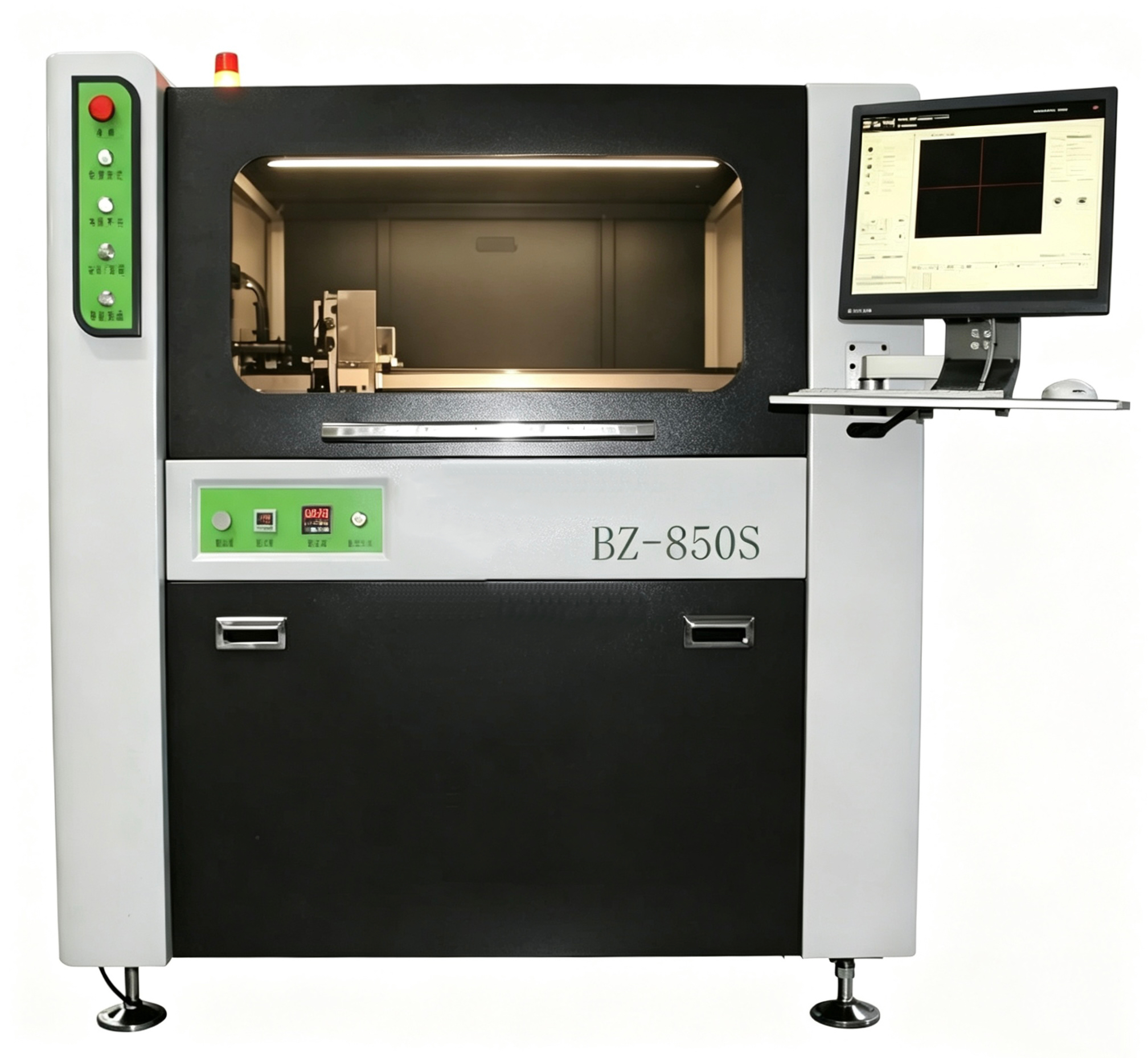
The 3 AM Glue Disaster That Made Me Rethink Everything
I still remember the exact moment I started taking glue dispensing seriously. It was 3 AM, I was standing in front of our production line, and there were 847 boards sitting in the rework bin. All of them had the same problem: components that had floated off their pads during wave soldering. The smt glue dispenser had been running for six hours with a partially clogged needle, depositing about half the required glue volume on every board. Nobody noticed until the wave solder station started spitting out boards with capacitors swimming in the solder bath.
That night cost us $4,200 in rework labor and scrapped components. The customer delivery was delayed by two days. I had to explain to our sales VP why we couldn't ship on time. And the worst part? The machine had been giving us warning signs for weeks—slightly inconsistent dot sizes, occasional misses, but we kept pushing because "it's just glue, how critical can it be?"
I don't think that way anymore. Today I want to share what I've learned about smt glue dispenser systems: what they actually do, how they fail, how to select one, and why the right dispenser can save you more money than almost any other piece of equipment on your SMT line.
What an SMT Glue Dispenser Actually Does (Beyond Just "Putting Glue Down")
Let me clear up a common misunderstanding. When people hear "smt glue dispenser," they think of a machine that squirts epoxy onto boards. That's technically correct, but it's like saying a race car "just burns fuel." The dispenser's actual job is far more nuanced.
In our LED module production, the smt glue dispenser handles four distinct applications:
Application One: Bottom-Side Component Retention
This is the classic use case. When we have components on the bottom side of a board that's going through wave soldering, we need to glue them in place. Without glue, the turbulence of the wave can wash components right off the pads. The dispenser places tiny dots of epoxy—typically 0.5mm to 1.0mm in diameter—under each component before the electronic led chip mounter places it.
Here's the critical detail: the glue must be strong enough to hold the component through the wave, but not so strong that it prevents rework. It must cure at a temperature lower than the soldering temperature. And it must remain stable for at least 24 hours in the work-in-process queue.
Application Two: Chip-on-Board (COB) LED Bonding
This is where things get really demanding. For COB LED modules, the smt glue dispenser applies a heat-conductive adhesive that simultaneously bonds the LED chip to the substrate and provides a thermal path for heat dissipation. The glue dot placement accuracy here is ±0.05mm—any deviation affects light output and thermal performance. One of our customers rejected an entire 5,000-piece order because the glue dot position shifted by 0.08mm, causing inconsistent color temperature across the array.
Application Three: Conformal Coating
Not all dispensing is for assembly—some is for protection. We use the smt glue dispenser to apply conformal coating on LED modules that will be used in outdoor signage. The coating protects against moisture, dust, and UV degradation. This application requires a completely different dispensing mode: instead of dots, we're tracing lines along specific board areas, controlling flow rate, and maintaining uniform thickness. The dispenser's software has to handle curved and angled paths, not just simple XY movements.
Application Four: Thermal Interface Material (TIM) Application
For high-power LED modules with heatsinks, the smt glue dispenser applies thermal grease or phase-change material between the LED array and the heatsink. The thickness must be controlled within ±0.02mm—too thick and thermal resistance increases; too thin and the heatsink doesn't make proper contact. We actually had to buy a second dispenser just for this application because the tolerances were tighter than our main dispensing machine could handle.
The Hidden Costs of Getting Dispensing Wrong
I want to spend some time on this because it's where most manufacturers lose money without realizing it. A malfunctioning smt glue dispenser doesn't always shut down your line. Often, it just quietly creates defects that you discover later, at higher cost.
Here are the four hidden cost centers I've identified from our own experience:
Cost One: Rework and Scrap
That 847-board disaster I mentioned at the beginning? It happened because the dispenser's needle had a partial clog that reduced flow by about 55%. The machine's pressure sensor didn't detect it because the clog was soft—a bit of partially cured epoxy that had formed at the needle tip. The dispenser continued to run, the pressure reading looked normal, but the actual glue volume delivered was completely inadequate.
When we discovered the problem, we had to rework every board. That meant stripping the wave-soldered components, cleaning the boards, reapplying glue with a manually operated syringe (10 seconds per dot, times 847 boards), and running them through the line again. Total cost: $4,200 in labor plus $900 in scrapped components that couldn't be reused.
Cost Two: Machine Downtime
Our old smt glue dispenser had another delightful feature: it would occasionally miss a glue dot entirely—maybe once every 800 cycles. The machine itself didn't know it had missed. The electronic led chip mounter would place the component on a dry pad, the board would go through reflow or wave soldering, and the component would fall off somewhere downstream.
We'd then have to stop the line, trace the problem board, figure out which batch was affected, and rework it. Each of these stoppages cost us about 45 minutes of line time—which, at our standard throughput, meant about $1,200 in lost production per event. And we were having these events about 3 to 4 times per shift.
Cost Three: Rework Damage
This one is subtle but expensive. When the smt glue dispenser applies too much glue, it can squeeze out from under the component and contaminate surrounding pads. On LED boards, this is particularly bad because glue contamination on pad surfaces causes poor wetting during soldering, which leads to intermittent electrical connections.
We had a batch of 2,000 LED modules that passed visual inspection, passed AOI inspection, and even passed initial functional testing. But after three months in the field, about 8% of them started failing—intermittent dimming and flickering. The root cause? Glue contamination on the LED cathode pads. The smt glue dispenser had been depositing dots that were 0.3mm too large for that specific LED package, and the glue was creeping onto adjacent pads. The contamination wasn't visible under normal AOI lighting, and the electrical failure only appeared after thermal cycling.
The cost? Full recall, replacement, shipping, and customer compensation. Over $18,000 total. From a glue dot that was too big by 0.3mm.
Cost Four: Yield Loss from Tombstoning
Tombstoning is when a small passive component stands up on one end during reflow, creating an open circuit. It's usually caused by uneven heating or uneven pad wetting. But here's something I learned the hard way: an inconsistent smt glue dispenser can also cause tombstoning.
If the glue dot is slightly off-center, the component will tilt during placement. The electronic led chip mounter places it anyway because the tilt is too small to trigger the mounter's vision system. During reflow, the off-center component experiences uneven solder surface tension on the two pads, and it toggles upright.
Our old dispenser was causing about 0.5% tombstoning on one particular capacitor. It didn't sound like a lot, but we were running 50,000 boards a month. That's 250 tombstoned components per month, each requiring a 5-minute manual rework. That's 1,250 minutes of labor—over 20 hours—every single month, just from one tiny inconsistency.
The Technology That Actually Matters in a Dispenser
When I was selecting our current smt glue dispenser, I had to learn a lot about the technology. Sales engineers love throwing around terms like "closed-loop pressure control" and "auger valve technology." I didn't understand half of it at first. Here's what actually matters, in plain language.
Valve Technology: The Heart of the Machine
The valve is what actually releases the glue. There are three main types:
- Pneumatic Valves are the cheapest. They use air pressure to push a needle open. They work fine for big glue dots with wide tolerances. But they're inconsistent for small dots. The opening time varies based on air pressure fluctuations, which means dot size varies. I wouldn't recommend them for anything under 1.0mm diameter.
- Auger Valves are what most serious dispensers use. An auger is a tiny screw that rotates to push glue through the needle. The rotation speed controls the flow rate. Auger valves are much more consistent than pneumatic valves—we see ±0.02mm dot diameter variation on our Shenzhen HanChengTong Technology Co., Ltd unit. The downside is that auger valves require more maintenance because the rotating screw can wear over time.
- Jet Valves are the high-tech option. Instead of touching the board, the jet valve fires droplets of glue through the air like an inkjet printer. This is extremely fast—up to 200 dots per second—and completely eliminates Z-axis movement, which speeds up the cycle. The jet valve on our new smt glue dispenser can place 0.3mm dots with ±0.01mm accuracy. The downside? Jet valves are expensive and sensitive to glue viscosity changes. They require precise temperature control.
Pressure Control: The Unsung Hero
The dispenser's pressure system determines whether the glue flows smoothly or pulses erratically. Our previous dispenser had a simple regulator valve. The pressure would dip slightly when the compressor cycled, causing periodic flow variation. The Shenzhen HanChengTong Technology Co., Ltd unit has a closed-loop pressure controller with a precision sensor that adjusts the pressure every millisecond.
This matters more than I expected. A 2 psi pressure fluctuation can change dot size by about 15% on some glue formulations. The closed-loop system eliminated that variation entirely.
Temperature Control: Critical for Viscosity-Sensitive Glues
Many glues have viscosity that changes significantly with temperature. A 5°C change can double or halve the viscosity. Our old dispenser had no temperature control at all. The glue would flow differently in the morning (cooler factory) than in the afternoon (warmer factory).
The new smt glue dispenser from Shenzhen HanChengTong Technology Co., Ltd has a heated fluid reservoir and a temperature-controlled valve block. The glue remains at exactly 25°C throughout the day. Dot size variation from temperature alone dropped from ±0.1mm to ±0.01mm.
Vision and Positioning
The dispenser needs to know exactly where to put the glue. Our Shenzhen HanChengTong Technology Co., Ltd unit has a downward-facing camera that reads fiducial marks on the board and compensates for board warpage and thermal expansion. It also has an upward-facing camera that checks the needle tip for contamination before each run.
The vision system pays for itself very quickly. Board warpage on our LED strips (600mm long) can be up to 0.5mm at the center. Without the camera correcting for this, glue dots on the middle of the board would be consistently mispositioned.
How We Integrated the Dispenser with the Rest of the Line
The smt glue dispenser doesn't work in isolation. It sits between the solder paste printer and the electronic led chip mounter on our line. But the integration is more complex than just physical placement.
Data Flow from the Dispenser
We feed glue dot data from the dispenser to our MES system, and from there to the double-sided AOI and the electronic led chip mounter. Here's why this matters:
The dispenser records the actual position and size of every glue dot. The electronic led chip mounter uses this data to adjust component placement—if a glue dot is slightly off-center, the mounter compensates by placing the component to match. This closed-loop coordination has reduced our placement-related defects by about 50%.
The AOI also uses the dispenser data. If the AOI detects a component that's missing or mispositioned, it checks the dispenser's data to see if the glue dot was present and correctly positioned. This helps us distinguish between dispenser failures and mounter failures, which dramatically speeds up troubleshooting.
Physical Layout Considerations
I learned some practical lessons about physical integration that aren't in any installation manual:
- The dispenser should have a cleaning station for the needle tip. Our unit automatically wipes the needle between every board. This prevents glue from drying on the tip and causing clogs.
- The dispenser should have a vacuum board clamp. Board movement during dispensing destroys accuracy. The clamp on our Shenzhen HanChengTong Technology Co., Ltd unit holds the board flat and still during the entire dispensing cycle.
- The dispenser should have a two-second buffer between boards. If boards come in too quickly, the dispenser can't complete its cleaning cycle. We had to slow our conveyor slightly to match the dispenser's pace.
Recipe Management
This is a pain point I want to highlight because it's rarely discussed. Each board type needs a "recipe" in the smt glue dispenser—the list of glue dot positions, sizes, and speeds. We have 97 active board types in our library. Managing these recipes used to be a nightmare with our old machine. The software was clunky, and each recipe had to be manually programmed.
The Shenzhen HanChengTong Technology Co., Ltd unit has a much better recipe management system. It can import data directly from our PCB design files. The engineer imports the component coordinates, selects the glue dot parameters (size, height, type), and the machine automatically generates the dispensing paths. Programming a new board takes about 15 minutes now, compared to 2 hours on the old machine.
Real Numbers: What Improved After We Upgraded
Since I'm a numbers guy, let me share the before-and-after data from when we upgraded from a basic pneumatic dispenser to the Shenzhen HanChengTong Technology Co., Ltd smt glue dispenser. This is all from our actual production logs.
Before (Old Pneumatic Dispenser):
- Glue dot position accuracy: ±0.18mm (3-sigma)
- Glue dot size variation: ±15% from target diameter
- Clog-related downtime: 3.2 hours per month
- Tombstoning rate on glued components: 0.8%
- Dispensing cycle time: 4.2 seconds per board
- Operator intervention required: roughly every 2 hours (needle checks, adjustments)
- Total dispensing-related scrap cost: about $2,100 per month
After (Shenzhen HanChengTong Technology Co., Ltd Auger/Jet Dispenser):
- Glue dot position accuracy: ±0.03mm (3-sigma) - that's a 6x improvement
- Glue dot size variation: ±3% from target diameter - 5x improvement
- Clog-related downtime: 0.4 hours per month - basically negligible
- Tombstoning rate on glued components: 0.08% - 10x improvement
- Dispensing cycle time: 1.8 seconds per board - 2.3x faster
- Operator intervention required: once per shift (mainly just topping up glue)
- Dispensing-related scrap cost: about $220 per month - 90% reduction
The ROI calculation was straightforward. The new smt glue dispenser cost about $18,000 more than the budget unit we could have bought. The annual savings in scrap, rework, and downtime exceeded $22,000. Payback period: 9.8 months. And that's before accounting for the improved yield and customer satisfaction that came from fewer field failures.
Common Dispensing Problems and How We Fixed Them
Let me share some troubleshooting experiences that might save you time. These are all problems we actually encountered with our smt glue dispenser at one point or another.
Problem: Dot Size Drifts Over Time
We'd set the dispenser for a 0.8mm dot, and after 2 hours it would be delivering 1.1mm dots. The old solution was to constantly recalibrate. The root cause was glue viscosity changing as the reservoir warmed up from the motor heat.
Fix: The Shenzhen HanChengTong Technology Co., Ltd dispenser has active temperature control on the reservoir. We set it to 25°C and the viscosity stabilized. Dot size now stays consistent all shift.
Problem: Strings and Tailings
Glue sometimes leaves a "string" connecting the dot to the needle as the needle lifts off. This was particularly bad on the old pneumatic dispenser. The strings would break off and contaminate the board.
Fix: The new dispenser has a "suck-back" function—after depositing the dot, the valve retracts slightly to break the glue filament. The jet valve version doesn't even touch the board, so strings aren't possible.
Problem: Air Bubbles in the Glue
Air bubbles cause inconsistent dots—sometimes no glue comes out, sometimes a giant blob appears. The bubbles came from the glue cartridge being replaced improperly.
Fix: We now use a de-airing function in the dispenser's software. It cycles the valve a few times to purge air after each cartridge change. Also, we stopped buying cheap glue cartridges—they trap more air during filling.
Problem: Glue Nozzle Clogs
This is the most common failure mode. Partial clogs cause reduced flow. Complete clogs stop dispensing entirely.
Fix: The new smt glue dispenser has an automatic needle cleaning station. After every board, the needle moves to the cleaning station, a small brush wipes the tip, and a vacuum removes the residue. We also now use a "end-of-shift" cleaning routine—the dispenser purges a small amount of glue and cleans the needle before shutting down, which prevents glue from drying inside the nozzle overnight.
Lessons for Anyone Buying a Dispenser
If you're in the market for a smt glue dispenser, here's what I wish I'd known before my first purchase.
Don't Buy Based on Price Alone
I made this mistake. The cheap dispenser saved us $7,000 upfront and cost us $22,000 in scrap and downtime within the first year. Price is the worst metric for selecting a dispenser. Buy based on accuracy, reliability, and support.
Test with Your Actual Glue and Board
Suppliers always demo with perfect conditions—clean glue, flat boards, ideal temperature. Your factory isn't like that. Before buying, ask to test the smt glue dispenser with your actual glue formulation and your actual board types. Run it for a full day. Measure the consistency.
Check the Software Before You Buy
The software is what you'll interact with every single day. The Shenzhen HanChengTong Technology Co., Ltd software is intuitive and stable. Some other dispensers we evaluated had software that looked like it was designed for Windows 98. Bad software makes good hardware useless.
Verify the Supplier's Support Capability
Our smt glue dispenser from Shenzhen HanChengTong Technology Co., Ltd came with onsite installation, two days of training, and 24/7 phone support. We've used the support line three times—once at 2 AM on a Saturday. They answered every time. That's worth more than any feature on the spec sheet.
Plan for Future Needs
The smt glue dispenser you buy should be capable of handling future products. Our current dispenser has more capacity than we need today, but we're already using it for new applications we didn't anticipate when we bought it—like TIM application and conformal coating. If we'd bought a dispenser that just met our current needs, we'd be shopping again right now.
Conclusion: Why I Now Respect the Dispenser as a Critical Machine
I used to think of the smt glue dispenser as a supporting actor—important but not starring. I was wrong. In our LED module production, the dispenser is arguably the most quality-critical machine on the line.
Why? Because the electronic led chip mounter places components, and the AOI inspects them, but the smt glue dispenser determines whether those components stay where they're supposed to be through the soldering process. A placement error is visible to the AOI. A dispenser error—a missing glue dot, an oversized dot, a mispositioned dot—creates failures that aren't always visible until the field.
Our Shenzhen HanChengTong Technology Co., Ltd smt glue dispenser has been running for 14 months now. It's dispensed over 8 million glue dots. We've had exactly two unscheduled downtime events—one from a defective glue cartridge (not the dispenser's fault) and one from a power outage that affected the whole factory.
I don't have to stand at the end of the line at 3 AM anymore, looking at 847 failed boards. That alone is worth the investment.
FAQ (Real Questions from Real Production Engineers)
Q1: How do I know if I need a jet valve or an auger valve dispenser?
A: It depends on your application. If you need very small dots (under 0.3mm) and high speed (over 100 dots per second), a jet valve is worth the extra cost. If you need standard dots (0.5mm to 2.0mm) at moderate speed, an auger valve dispenser like our Shenzhen HanChengTong Technology Co., Ltd unit is more cost-effective and easier to maintain. We use jet valve for our COB LED bonding (very small dots) and auger for everything else.
Q2: How often should I replace the dispenser needle?
A: It depends on your glue type and volume. For our epoxy, we replace the needle every 50,000 cycles. The dispenser tracks the count and alerts us when it's time. Some manufacturers recommend every 20,000 cycles. Our Shenzhen HanChengTong Technology Co., Ltd unit has been consistently good to 50,000 cycles with regular cleaning.
Q3: Can the SMT glue dispenser handle different glue types without changing hardware?
A: Yes, but you may need different components. We use three glue types—standard epoxy, heat-conductive adhesive for COB LEDs, and conformal coating. The Shenzhen HanChengTong Technology Co., Ltd dispenser has quick-change valve blocks for each glue type. The changeover takes about 15 minutes. Flush the system completely between glue types to prevent cross-contamination.
Q4: My SMT glue dispenser keeps missing dots. What's wrong?
A: This happened to us. Check three things first: 1) Is the needle clogged? 2) Is the glue cartridge empty? 3) Is the board warped? If all three are fine, check the pressure sensor calibration. We had a pressure sensor drift issue on our old unit. The Shenzhen HanChengTong Technology Co., Ltd dispenser has a self-calibration routine that we run weekly to prevent this.
Q5: Do I need a separate SMT glue dispenser for different board sizes?
A: No. The dispenser's XY motion range determines the maximum board size. Our Shenzhen HanChengTong Technology Co., Ltd unit handles boards up to 600mm × 400mm. We run everything from 50mm LED modules to 600mm LED strips on the same machine. The vision system automatically adjusts for board size.
Q6: What's the typical maintenance schedule for an SMT glue dispenser?
A: Daily: wipe the needle, check glue level, run a test dot. Weekly: clean the needle, check valve seals, run calibration. Monthly: clean the pressure system, inspect the motion rails, update software if needed. The Shenzhen HanChengTong Technology Co., Ltd unit has a maintenance log that reminds us when each task is due.
Q7: Can the dispenser interface with my MES system?
A: Yes, if the MES supports standard protocols. Our Shenzhen HanChengTong Technology Co., Ltd dispenser communicates via TCP/IP and supports data export in standard formats. We log every dot—position, size, timestamp—into our MES for traceability. That was a requirement for our automotive customer audits.
Q8: What's the biggest mistake people make with SMT glue dispensers?
A: Underestimating the importance of the glue itself. People spend a lot on the dispenser and then buy the cheapest glue. Bad glue—inconsistent viscosity, high bubble content, short pot life—will make any dispenser look bad. We source our glue from a premium supplier recommended by Shenzhen HanChengTong Technology Co., Ltd, and we test every batch before it goes on the line.